
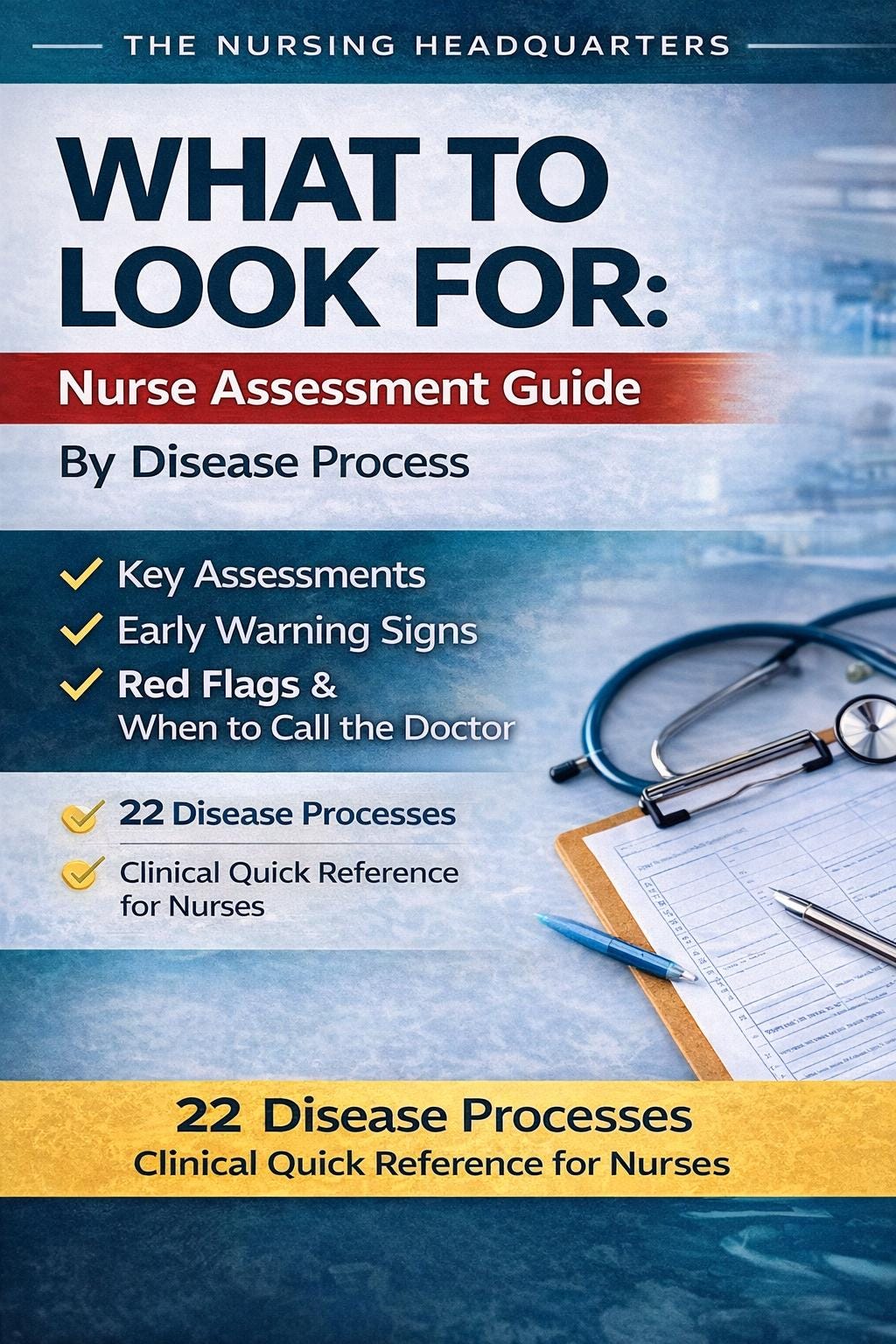
Nurse Assessment Guide: What to Look For by Disease Process
$12.99
WHAT TO LOOK FOR: Nurse Assessment Guide by Disease Process
Nurses are the first line of defense when a patient begins to deteriorate. The ability to recognize subtle clinical changes before they become life-threatening is one of the most important skills a bedside nurse can develop.
This guide was created as a rapid clinical reference nurses can scan in seconds during a shift.
Inside you’ll find clear, practical guidance on what to assess, what warning signs to watch for, and when to escalate care.
What This Guide Covers
✔ Key nursing assessments for 22 common disease processes
✔ Early warning signs nurses often detect before deterioration
✔ Critical red flags requiring urgent intervention
✔ Monitoring priorities for each condition
✔ Clear examples of when to notify the provider
Each condition is organized in an easy-to-scan format:
• Top Nursing Priority
• Key Assessments
• Early Warning Signs
• Red Flags
• What to Monitor
• When to Call the Doctor
Disease Processes Included
Sepsis
Stroke
Myocardial Infarction
Congestive Heart Failure
COPD Exacerbation
Pneumonia
Pulmonary Embolism
Hypertensive Crisis
Hypotension / Shock
Diabetic Ketoacidosis
Hypoglycemia
Acute Kidney Injury
Liver Failure
GI Bleed
Pancreatitis
UTI in the Elderly
Delirium
Deep Vein Thrombosis
Compartment Syndrome
Anaphylaxis
Opioid Overdose
Postoperative Complications
Bonus Clinical Reference Sections
• 20 Red Flags Nurses Should Never Ignore
• When Nurses Should Escalate Care Immediately
• The 10 Assessment Habits of Strong Nurses
• Rapid Head-to-Toe Assessment Checklist
• Critical Values Reference Table
Who This Guide Is For
• New graduate nurses
• Nursing students
• Med-surg nurses
• ICU step-down nurses
• Travel nurses
• Any bedside nurse who wants a quick clinical reference
Product Details
Digital download (PDF)
35 pages
Instant download after purchase
No physical product will be shipped.
Created by The Nursing Headquarters
Designed to help nurses recognize patient deterioration early, communicate clearly with providers, and practice safely at the bedside.