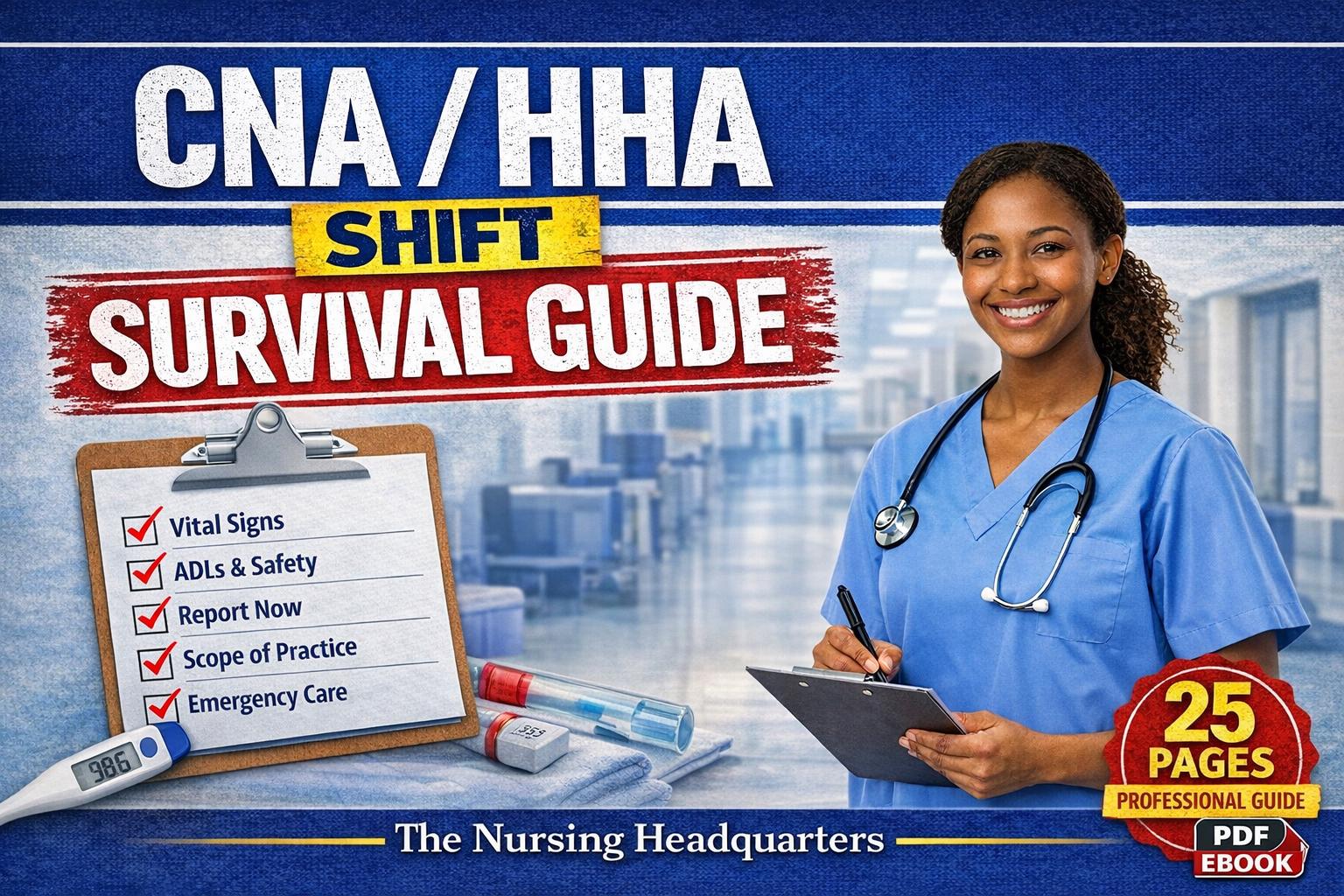
CNA and HHA Shift Survival Guide: Real-World Skills, Safety, and Job Duties
$12.99
This 25-page CNA / HHA Survival Guide was created for nursing assistants and home health aides who want to feel confident, protected, and prepared on every shift.
This is not a short checklist or exam prep sheet.
It’s a practical, real-world reference designed to support you during actual patient care.
Written by a nurse with hands-on experience, this guide focuses on what CNAs and HHAs are expected to do, what must be reported immediately, and how to protect yourself legally and professionally.
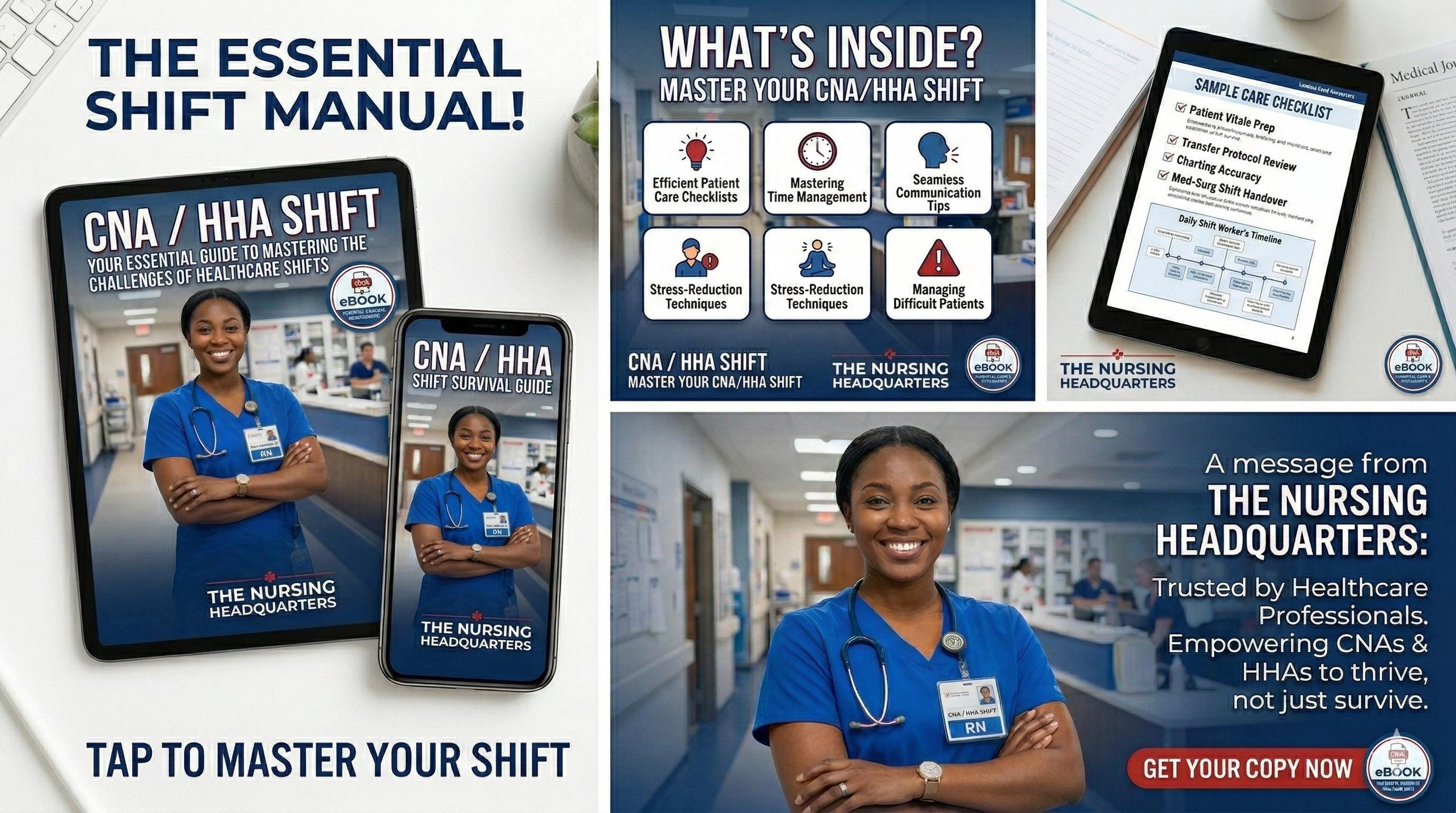
📘 WHAT’S INSIDE (25 PAGES)
This guide covers the skills and responsibilities CNAs/HHAs use most, including:
Vital signs and what results must be reported immediately
Intake and output monitoring
Safe assistance with activities of daily living
Infection control and PPE use
Dementia and difficult-behavior communication strategies
Fall prevention and post-fall response
Abuse and neglect recognition and reporting
Scope of practice: what you can do vs cannot do
Proper documentation and legal protection
Emergency situations and when to get the nurse
Professional boundaries and patient rights
Real-world scenarios aides encounter on shifts
Includes clear CAN / CANNOT guidance and REPORT IMMEDIATELY indicators throughout.
🧠 HOW THIS GUIDE IS MEANT TO BE USED
This guide is designed as:
A reference you return to, not a one-time read
A confidence builder for new or transitioning CNAs/HHAs
A safety reminder for experienced aides
You can review sections as needed before or after shifts.
👩⚕️ WHO THIS GUIDE IS FOR
Ideal for:
Certified Nursing Assistants (CNAs)
Home Health Aides (HHAs)
New hires and recently certified aides
Aides working in home care, hospice, or long-term care
Anyone who wants to avoid mistakes and protect their license
📥 DELIVERY DETAILS
Instant digital download
PDF format
25 pages
For educational use only
⚠️ DISCLAIMER
Scope of practice varies by state and employer.
This guide does not replace facility policy, nurse instruction, or clinical judgment. Always follow your organization’s protocols.
⭐ FINAL NOTE
This guide is about getting through your shifts safely, knowing when to speak up, and understanding your role clearly.
It’s not about doing more —
it’s about doing the right things, the right way.